

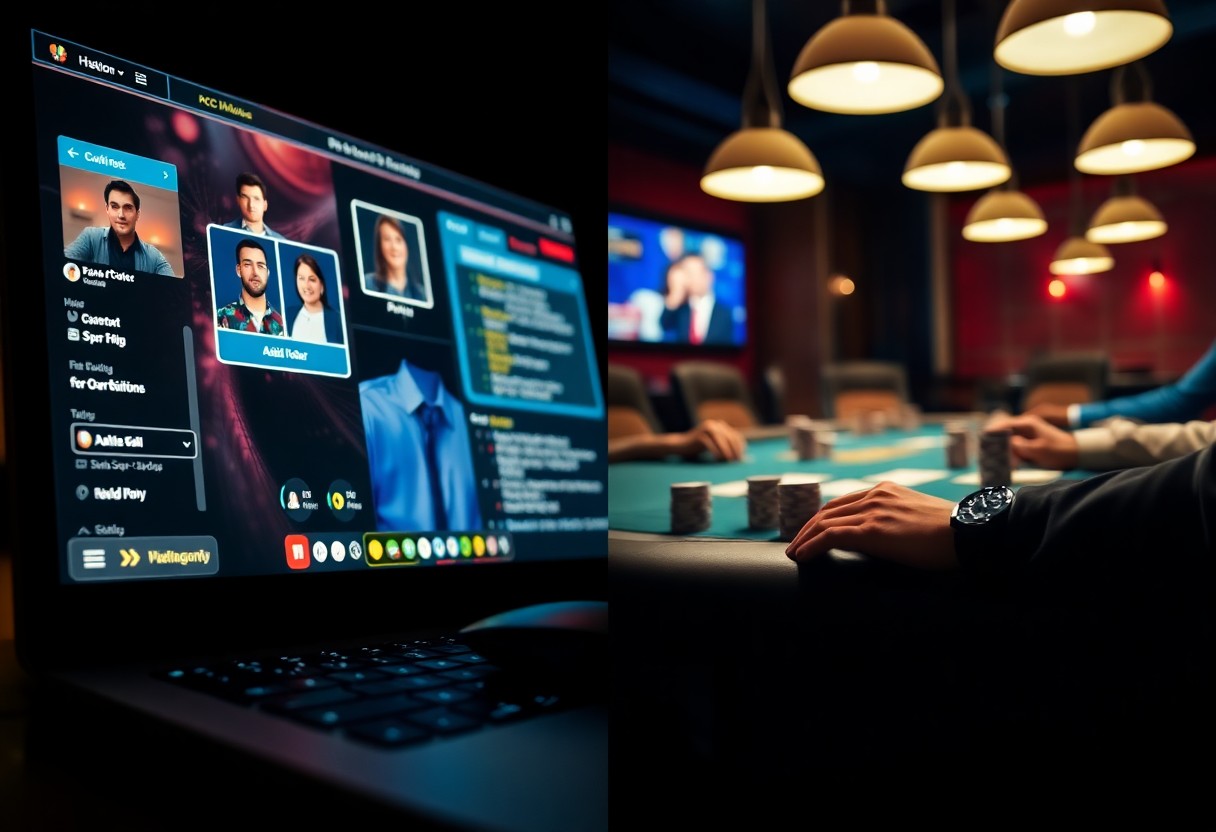
You navigate a radically different bluffing landscape online versus live poker: online play emphasizes timing tells, pattern analysis and HUDs, while live tables reward physical tells and table presence; the digital era also brings greater data-driven exploitation and the danger of multi-tabling and misreading timing, altering when and how often bluffs pay off, and demanding adapted strategies, tighter risk control and an understanding of legal and ethical boundaries.
Types of Poker
Different formats force distinct bluffing profiles: cash games favor repeated, exploitative bluffs because players can reload, tournaments compress ranges as blinds rise, and fast-fold games punish long, multi-street deception. Mixed and short-deck variants change hand equities and frequency, so you must adapt bet sizing, timing and opponent selection to the format.
| Texas Hold’em | Most common; online ~200-300 hands/hr per table vs live ~20-30 hands/hr; HUDs boost range-based bluffing. |
| Omaha | Pot-heavy, nut-driven; bluffs succeed less often-equity calculations and board texture are decisive. |
| Seven-Card Stud | Information unfolds via upcards; memory and sequencing beat one-shot deception. |
| Mixed Games (H.O.R.S.E.) | Switching rules punish single-style bluffers; you need balanced lines across variants. |
| Short Deck | Higher variance, slimmer hand distribution-aggression and pot control matter more. |
- Bluffing
- Bet sizing
- Timing tells
- Multi-tabling
- Physical tells
Online Poker
Players see roughly 200-400 hands/hour per table online; multi-tabling can push that far higher, so statistical edges compound. HUDs, tracker data and solvers encourage frequency-based bluffs and polarized ranges; absence of physical tells makes bet sizing, timing patterns and river shove frequencies the primary deception tools.
Live Poker
Live games average about 20-30 hands/hour, giving time to read opponents: eye contact, breathing, chip handling and verbal patterns all become usable inputs. Stack depth and table composition matter-longer stacks enable multi-street bluffs while shallow stacks force shove/fold dynamics.
At a typical casino ring game you’ll watch ~20-30 hands/hr and can exploit small, repeatable tells; experienced pros note live 3‑bet rates often sit around 6-10% compared with higher online aggression. The live table rewards calibrated observation, deliberate bet sizing and sustained psychological pressure.
Bluffing Strategies
Successful bluffs balance math, image and opponent type: in cash games aim for an overall bluff frequency around 8-20%, while late-stage tournaments can push to 25-40% depending on stack depths and antes. Use blocker-based bluffs (holding A♠ or K♠) to reduce opponent equity and prefer multi-street plans when facing callers; avoid single-card desperation bluffs. Study hand histories-sample sizes of 1,000+ hands reveal exploitable patterns faster than intuition.
Adapting to Online Environments
HUDs and bet-history give a quantitative edge: tag laggers by VPIP/PFR splits (e.g., VPIP 25-35 with PFR 10-15) and increase bluff frequency against tight-openers. Timing patterns, bet-size consistency and multi-tabling change behavior-use 3-bet bluffs with blockers and polarized sizes (25% or 75-100% pot) to exploit automated tendencies. Rely on hand histories and 5,000+ hand samples to tune frequencies instead of live reads.
Techniques for Live Play
Physical tells remain powerful: subtle breathing, chip speed and posture shifts often signal strength or discomfort. Use empathetic table talk and deliberate timing to craft an image-smiling after a fold builds credibility for future bluffs. Prefer blocking bets of 30-40% pot to deny free cards, and deploy multi-street bluffs only when fold equity exceeds call equity, typically against single opponents with ~15-40 big blind stacks.
Live dynamics create small-sample edges: players see roughly 20-30 hands per hour, so a short bluffing sequence (2-3 hands) can establish momentum; exploit opponents who show down weak hands frequently. Emphasize positional steals-attempt to take blinds 45-60% of the time from late position versus passive blinds-and record showdown behavior for 50-100 hands to identify reliable fold windows. Use physical cues sparingly to avoid creating reverse tells.
Tips for Successful Bluffing
Small, consistent adjustments separate profitable plays from costly ones: favor bluffing in late position, use blockers to polarize hands, and size bets between 40-70% pot so calls demand meaningful equity. Avoid multiway spots and never bluff with effective stack under ~30bb unless shoving; in tournaments, pressure the bubble and late stages more frequently. Online opponents often fold more to sizing patterns than live players, who react to physical tells. Recognizing which opponent pool you face shifts frequency and sizing immediately.
- Play more bluffs in late position after a missed coordinated board.
- Use HUD stats (VPIP, PFR, 3‑bet) when online poker to target callers.
- Prefer single‑opponent pots; avoid bluffing into >2 players.
- Adjust bet sizing to table image-smaller vs. calling stations, larger vs. nitty players.
- Cap bluffs with live poker tells only when confirmed over several hands.
Reading Opponents
Online, rely on metrics: fold-to‑cbet >65% invites more bluffs, and a villain with VPIP <25% and PFR <15% is a tight, fold‑heavy target. Live, catalog micro‑tells-chip slides, posture shifts, timing-over 3-5 hands to avoid one‑off misreads. Combine behavior with betting ranges: if a player suddenly raises large on the river after passive play, weight value hands higher. Use specific HUD numbers and 3‑hand pattern recognition to turn reads into profitable bluffs.
Timing and Context
Stack depth and table stage determine viability: with stack sizes under 30bb, shoves replace river bluffs; at 100bb deep, layered bluffs (check‑raise/turn c‑bet) work better. Multiway pots reduce fold equity dramatically, so prefer heads‑up spots. In tournaments watch ICM-late stage chips are worth more, so stealing increases while risky bluffs decrease. Align timing with opponent tendencies and pot odds.
Concrete math helps: if the pot is $100 and you bet $60, the caller needs >37.5% equity (60/(100+60)) to break even, so your bluff must force folds more than 62.5% of the time to be +EV. With 40bb effective, a successful 3‑bet bluff should target players whose cold‑call frequency is <20%. In cash games, exploit passive regs by increasing bluff frequency by ~10-15% when they fold to raises over 70% of the time.
Step-by-Step Guide to Bluffing
Adopt a four-step routine: assess opponents and table, plan a line with position and stack depth, execute using sizing and blockers, then reassess after the hand. In online 6-max cash games, targeting players with fold-to-cbet >65% and using a 33% flop / 55% turn sizing yields higher success; live play favors larger sizing-often 50-80% pot-to exploit physical uncertainty.
Step-by-Step Checklist
| Step | Key Actions |
|---|---|
| 1. Assess | Use HUDs: FvCbet, fold-to-3bet, position, SPR (aim SPR 2-4) |
| 2. Plan | Pick boards with blockers/backdoors (ace blocker, two-tone), choose bet sizes |
| 3. Execute | Bet 30-40% flop online, 50-80% live; vary timing to sell story |
| 4. Contingency | If called, control pot or shove; never bluff multiway |
Planning Your Bluff
Target opponents with specific stats: online exploit players with fold-to-cbet ≥65% or fold-to-3bet ≥60%; in live games, focus on observables like quick check-fold tendencies. Factor stacks-prefer SPR 2-4 for postflop pressure-and choose boards where your blockers remove strong combos (an ace of the suit you hold reduces opponent nut flush combos). Also map recent table history: if you’ve shown down bluffs, frequency must drop.
Executing the Bluff
Size bets to buy folds: in online 6-max use ~33% pot on flop then ~55% on turn; live, increase to ~60% on flop to leverage physical reads. Use blockers-Ace or paired board cards-to reduce opponent calling combinations, and vary timing (add 2-4 seconds) to mimic thoughtful play. Avoid bluffing players who call >40% of turn bets; that is dangerous.
Calculate fold equity before committing: fold equity = bet / (pot + bet). For example, betting $60 into a $100 pot needs opponent to fold >60/160 = 37.5%. Balance by mixing bluffs with value hands (~20-30% of range) and have a clear line if called-either pot control with marginal equity or commit/shove when SPR and outs justify it. Online multi-tabling favors simpler, HUD-driven bluffs; live spots allow more nuanced timing and psychological leverage.
Factors Influencing Bluffing
Multiple variables shape bluff viability; key considerations include:
- Stack sizes – deep stacks (>100bb) enable multi-street bluffs
- Position – late seat boosts fold equity
- Game format – cash, MTT, SNG change risk profiles
- Player types – HUD-readables vs physical tells
- Tools – HUDs and trackers alter frequencies
Knowing these variables lets you calibrate bluff frequency and sizing by situation.
Player Dynamics
Online pools often skew younger and more aggressive; multi-tabling raises hands/hour and lowers focus. Use metrics like VPIP, PFR and 3‑bet%-for example, a 25% VPIP/5% 3‑bet opponent opens many steal spots-while live play demands reading physical tells and timing patterns, shifting which bluffs are profitable.
Game Format
Cash games permit reloads, so exploitative, repeated bluffs are viable; tournaments impose ICM, suppressing bluff frequency near bubbles and final tables. Short stacks (<20bb) force shove/fold dynamics where bluffs rarely succeed, unlike deep-stack cash (100bb+) that favors blocker-based and multi-street bluffs.
Pay attention to SPR and bet sizing: with SPR >4 multi-street bluffs and blocker plays become effective, while SPR <2 reduces lines to commit-or-fold. Typical online raises average ~2.2-3x preflop versus live 3-4x, changing pot size and required fold equity; a 0.5 pot river bluff demands a different break-even than a 0.75-1 pot shove.
Pros and Cons of Online vs. Live Bluffing
Bluffing online trades physical cues for data and speed: HUDs and timing tells let you exploit statistical patterns, while live tables reward reading micro-behavior. Online enables faster sample sizes and frequent, low-risk trials; live play offers richer context, allowing single bluffs to carry more weight. Expect different win-rate drivers – online success often depends on exploitation of player pools and software, whereas live success hinges on table image and real-time behavioral reads.
Comparison of Online vs Live Bluffing
| Online Bluffing | Live Bluffing |
|---|---|
| Use of HUDs/trackers for VPIP/PFR/3-bet stats | Relies on physical tells: posture, speech, breathing |
| Fast pace – >60 hands/hour per table typical | Slow pace – ~20-30 hands/hour, more time per decision |
| Multi-tabling (4-6+ tables) increases sample sizes | Single-table focus improves situational reads |
| Timing tells and bet patterns are prominent | Timing less informative; live timing influenced by theatrics |
| Higher anonymity; easier to gamble with image resets | Table image persists across sessions, affecting long-term lines |
| Lower emotional visibility – tilt less obvious | Emotional tilt is visible and exploitable |
| Software enables precise sizing and multi-street lines | Sizing often constrained by chips and face-up moves |
| Collusion/ghosting risk via online networks | Collusion harder but physical signaling exists |
| Rapid learning via hand histories and solvers | Live reads require longer qualitative observation |
Advantages of Online Bluffing
Software tools and volume amplify bluff development: HUDs give exact frequencies (VPIP, PFR, fold-to-bet), enabling targeted bluffs against players with >50% fold-to-flop stats. Multi-tabling yields thousands of hands monthly, so you can test lines rapidly; many pros recommend adjusting bluff frequency to keep overall rate in the 8-20% band based on position and stack depth.
Disadvantages of Live Bluffing
Live bluffing exposes you to subtle human reads and social pressure: visible tilt, micro-expressions, and voice inflections can both help and betray bluffs, making a misread costlier. Strong table images or vocal opponents often force larger fold equity requirements, and limited hands per hour slow down experiential learning compared with online play.
Deeper issues include practical constraints: chip denominations and physical bet sizes limit fine-grained overbets, and opponents often remember specific hands across sessions, so a failed bluff can earn lasting skepticism. Additionally, the slower rhythm (~20-30 hands/hr) reduces the number of experiments you can run, so adapting live requires patience, tighter sample-based adjustments, and more reliance on qualitative reads than raw statistics.
Summing up
With this in mind, bluffing in the digital era demands adaptation: online play emphasizes timing, bet sizing, and pattern recognition enhanced by tracking tools, while live poker still rewards physical tells and table presence. Effective players blend range-based aggression, exploit opponents’ technological habits, and adjust for multi-tabling and HUD influence, maintaining disciplined spot selection and awareness of how virtual dynamics reshape risk and reward.
FAQ
Q: How does bluffing frequency differ between online and live poker?
A: Online games generally see a higher bluffing frequency, especially at lower stakes and in cash-game pools where players multi-table and play fast. The lack of physical presence reduces risk for bluffs, so players probe more often with continuation bets, probe bets on the turn, and river bluffs to exploit weaker folds. In live games bluffs tend to be fewer but more selective: physical cues, slower pace, and direct player interaction make a failed bluff more costly to table image, so players wait for clearer spots (position, perceived weakness, chip-stacks). Adjust frequency by table type: tighten bluffing in passive, sticky-player games and increase it when opponents fold too often or give frequent credit to aggression.
Q: How do tells and timing tells change in the digital era and how can I use them?
A: Physical tells (eye contact, breathing, chip handling) disappear online, replaced by timing patterns, bet sizing consistency, chat behavior, and software-derived stats. Quick snaps or instant folds can signal marginal hands, long thoughtful pauses often indicate tough decisions that may be strong or weak; inconsistent timing can be exploited. HUDs and hand histories reveal tendencies over many hands, letting you spot players who over-fold to large bets or over-bluff on certain textures. Countermeasures: standardize your own timing and bet sizes to avoid giving information, use timers or deliberate small delays when needed, and leverage population-level data rather than relying on single-instance reads.
Q: What practical adjustments should I make to my bluffing strategy online versus live play?
A: Online: use range-based thinking and balanced sizing to avoid exploitable patterns, rely on HUD stats to pick bluff targets (high fold-to-cbet, low aggression), prefer multi-street bluffs with blocking bets and polarization, and be mindful of ICM and bubble dynamics in tournaments where calls tighten. Mix in timing variability and use consistent sizing to mask hand strength. Live: build and exploit table image, set up believable storylines with physical behavior and sizing ramps, pick smaller, well-timed bluffs when facing timid callers, and target players who show visible uncertainty. In both formats size bluffs to what opponents are likely to fold, consider stack depths and pot odds, and tilt-manage to avoid over-bluffing after bad beats.