


When the river ruins your plan: why bad beats hurt and what’s at stake
You’ve played a near-perfect hand, invested chips with confidence, and watched the river deliver a card that undoes your plan. That sting—often called a “bad beat”—is more than frustration; it threatens your bankroll, your focus, and the quality of every decision you make afterward. Understanding the mechanics of that emotional hit is the first step to preventing a single unlucky outcome from costing you far more than the pot.
Bad beats feel worse than normal losses because of how your brain processes fairness, expectation, and control. You anticipated a specific result after making the correct play, and the mismatch between expectation and outcome triggers strong reactions. If you allow that reaction to dictate your next moves, you’ll drift from sound strategy into revenge plays, overbluffs, or premature session abandonment.
How your mind and body react to a bad beat — recognize the signs early
Physical and cognitive signals that you’re tilting
Before behavior changes, your body signals distress. You may notice increased heart rate, shallow breathing, muscle tension, or a sudden urge to act immediately. Cognitively, you might experience tunnel vision, oversimplified thinking (“I always get crushed”), or an urge to chase losses with bigger bets.
- Heart rate and adrenaline spikes—these push you toward impulsive decisions.
- Reduced working memory—complex reads and multi-step plans become harder.
- Negativity bias—one bad outcome colors your interpretation of the rest of the table.
Why recognition matters
If you can spot these signs early, you buy yourself options. Recognition lets you interrupt the escalation cycle and choose a measured response instead of reacting on autopilot. Teaching yourself to notice a single physical or thought pattern (for instance, clenched jaw or the thought “I’ll get them next hand”) creates a reliable trigger to deploy recovery tactics.
Practical first responses: immediate actions to stop a bad beat from snowballing
Short, concrete steps you can use at the table
When the next bad beat lands, have a short checklist ready. These actions are designed to re-center you and preserve decision quality for the remainder of the session.
- Pause for one deep breath. A deliberate inhale–exhale clears some adrenaline and gives you one calm second to think.
- Take a physical reset. Sit back, uncross your arms, and relax your shoulders; small changes reduce muscle tension and signal your brain to downshift.
- Use a neutral verbal cue. Say quietly to yourself a short phrase like “Reset” or “One hand” to break emotional momentum.
- Refocus on process, not outcome. Ask a simple question: “What decision would I make if nothing had changed?” If the correct play is fold, fold — not as punishment, but as adherence to process.
Short-term tactical choices that protect your bankroll and focus
Avoid large deviations from your standard strategy immediately after a bad beat. Don’t raise beyond your usual range to “prove a point,” and resist overplaying marginal hands. If you feel your impulses increasing, adopt conservative actions: tighten your opening ranges, reduce blind-stealing attempts, or shorten the session.
- Consider a timed break. Even 5–10 minutes away from the table reduces emotional escalation and restores perspective.
- Lower your stakes or buy-in temporarily if permitted and appropriate; reducing financial pressure helps reset risk perception.
- If you play online, close the table or mute chat to eliminate additional triggers and distractions.
These early interventions are practical and repeatable. They shift you from reactive to intentional behavior and limit how much a single unlucky hand can influence the rest of your play. In the next section, you’ll learn how to build longer-term mental routines—pre-session habits, post-hand reviews, and mindset work—that make those immediate recovery tactics second nature and reduce how often you reach for them.
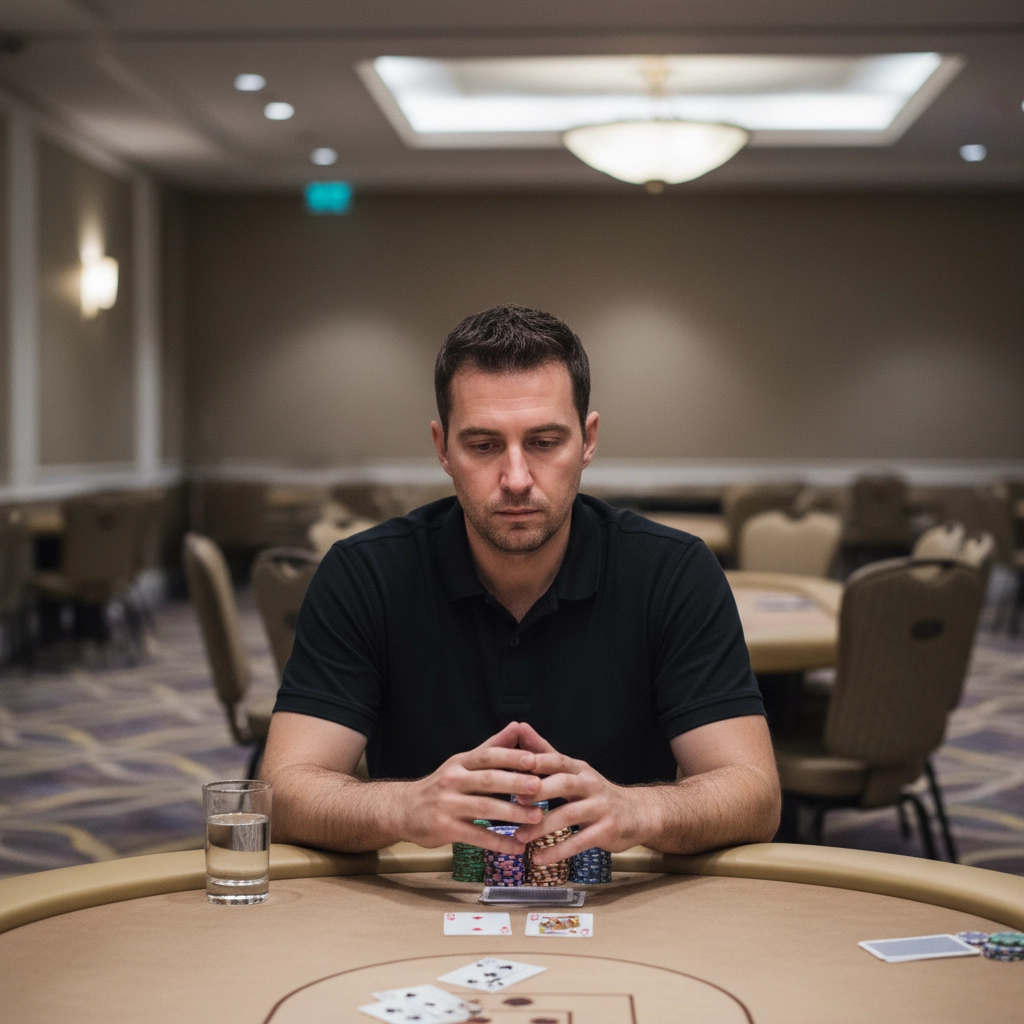
Make recovery automatic: pre-session routines that reduce tilt risk
Good recovery starts before you sit down. Pre-session routines prime your body and mind to treat each hand as an independent decision. The goal is to lower baseline reactivity so that when variance hits, you have a buffer of calm and clarity to draw from.
- Set a clear, process-oriented goal. Before the session write one or two objectives you can control—“stick to my opening ranges” or “avoid more than two large bluff attempts per hour.” Process goals invite consistent behavior regardless of outcomes.
- Do a quick physical reset. Two minutes of focused breathing (4 seconds in, 6 seconds out for 2–3 cycles) or progressive muscle relaxation loosens tension and reduces adrenaline before you start.
- Run a short mental checklist. Ask: Am I rested? Am I hydrated? Am I within my bankroll for this session? If the answer to any is no, delay play or adjust stakes. Physical discomfort and financial stress magnify tilt.
- Prime with a short visualization. Spend one minute imagining a hand where you make the correct decision but lose, and observe your calm response. Rehearsing acceptance reduces the shock when it really happens.
- Limit exposure to triggers. Decide in advance whether you’ll engage with chat, drink alcohol, or play multiple tables. Removing avoidable stressors at the outset prevents compounding emotions later.
Creating a simple ritual—same breathing, same checklists, same goals—turns preparation into habit. Habit reduces the cognitive load of deciding how to behave after a bad beat; you’ve already chosen a default, healthy response.
Turn losses into learning: post-hand and post-session review habits
Not every bad beat needs immediate analysis, but structured review turns emotional losses into skill gains. Separate the emotional cooldown from the analytic review: cool down first, review later.
- Immediate: apply the “one-hand” rule. After a painful hand, commit to making correct plays for the next hand—no revenge bets, no chasing. Use a one-minute breathing reset if needed before returning.
- Short-term: jot one objective per session in a small notebook or app—what did I do well? What decision felt off? Keep entries brief and specific (e.g., “Called A♦K♦ on flop — should have checked behind.”).
- Deeper review: after you’ve calmed down (end of session or the next day), review flagged hands objectively. Ask three questions: Was my decision based on sound logic or emotion? What information did I have at the time? Would I act the same with perfect detachment?
- Use metrics, not stories. Track tangible stats—VPIP, PFR, fold-to-3bet—rather than subjective narratives. Numbers reveal patterns you can correct; stories justify behavior.
Over time, this discipline changes your relationship with bad beats. Instead of a crushing anecdote, a loss becomes a data point in a trending file. That reframing turns variance from a moral failure into a feedback mechanism.
Build durable resilience: lifestyle and mental practices that lower tilt frequency
Long-term tilt reduction happens off the felt. Physical health, cognitive training, and deliberate mindset work recalibrate your baseline tolerance for frustration and uncertainty.
- Prioritize sleep and nutrition. Poor sleep amplifies emotional reactivity; consistent rest improves patience and multi-step reasoning—both essential at the poker table.
- Train attention. Short daily practices—5–10 minutes of focused attention meditation or concentration drills—improve your ability to notice emotional surges early and choose responses.
- Practice cognitive reframing. When you catch yourself in a “this always happens to me” thought, practice replacing it with reality-based phrasing: “Variance favors no one; this is one hand in many.” Repeat this reframing aloud at least once a day until it feels natural.
- Manage bankroll consciously. Use stake selection and session-size rules that keep loses psychologically tolerable. If a loss hurts because the money matters too much, lower stakes or adjust buy-ins before you play.
- Expose yourself, intentionally. Periodically play through small, controlled sequences of bad beats (e.g., brief drills with friends or in low-stakes games) to build tolerance and reiterate your recovery rituals.
Resilience isn’t a single skill; it’s an ecosystem of habits—sleep, nutrition, attention training, bankroll discipline, and honest review—that together make your automatic response to a bad beat a calm, strategic one. The next section will tie these routines into a compact in-game checklist you can use to anchor your decisions when emotions threaten to take over.

In-game anchor: a compact checklist to stop tilt fast
- Stop. The moment you feel agitation rising, close betting and refuse impulsive plays—give yourself permission to pause for one hand.
- Breathe. Do one full minute of paced breathing (4 in, 6 out) to lower adrenaline and restore clarity.
- Reassess. Ask three quick questions: What is my process goal right now? Am I playing within my bankroll? Is this decision information-based or emotion-based?
- Act with a rule. Commit to a simple behavioral rule for the next hand (check behind, no 3-bets, or fold to one street of pressure). Rules prevent rationalizing bad impulses.
- Log & reset. If you still feel tilted after the hand, mark the session for later review and take a short break (5–15 minutes) before returning—or end the session if necessary.
Keeping your edge through emotional control
Emotional control in poker is less about eliminating feeling and more about choosing responses that protect your long-term edge. Treat the tools here—routines, checklists, review habits, and lifestyle practices—as instruments you can tune. Small, consistent use compounds: one calm reset, one detached review, one night of good sleep—these are the plays that add up off the felt and on it.
If you want deeper methods and exercises for the mental side of the game, consider exploring dedicated resources like The Mental Game of Poker for structured guidance and drills.
Frequently Asked Questions
How long should I wait before reviewing a bad beat?
Cool down first—give yourself at least 15–30 minutes or review the next day. Immediate analysis while emotional usually biases your conclusions; a short break lets you apply objective questions and metrics with a clear head.
What is a practical break routine after a rough hand?
Keep it simple: stand up, hydrate, do one minute of paced breathing, and perform a quick mental checklist (sleep, bankroll, goals). If agitation persists, extend the break to 5–15 minutes or end the session to protect bankroll and decision quality.
Are online and live tilt triggers different, and should my approach change?
Triggers overlap (losses, bad timing) but differ in context—online distractions and multi-tabling can escalate tilt faster, while live games involve social pressure. Use the same core tools—pre-session routine, in-game checklist, and post-session review—but adjust triggers you limit (mute chat online, step outside in live games) and stake choices accordingly.