

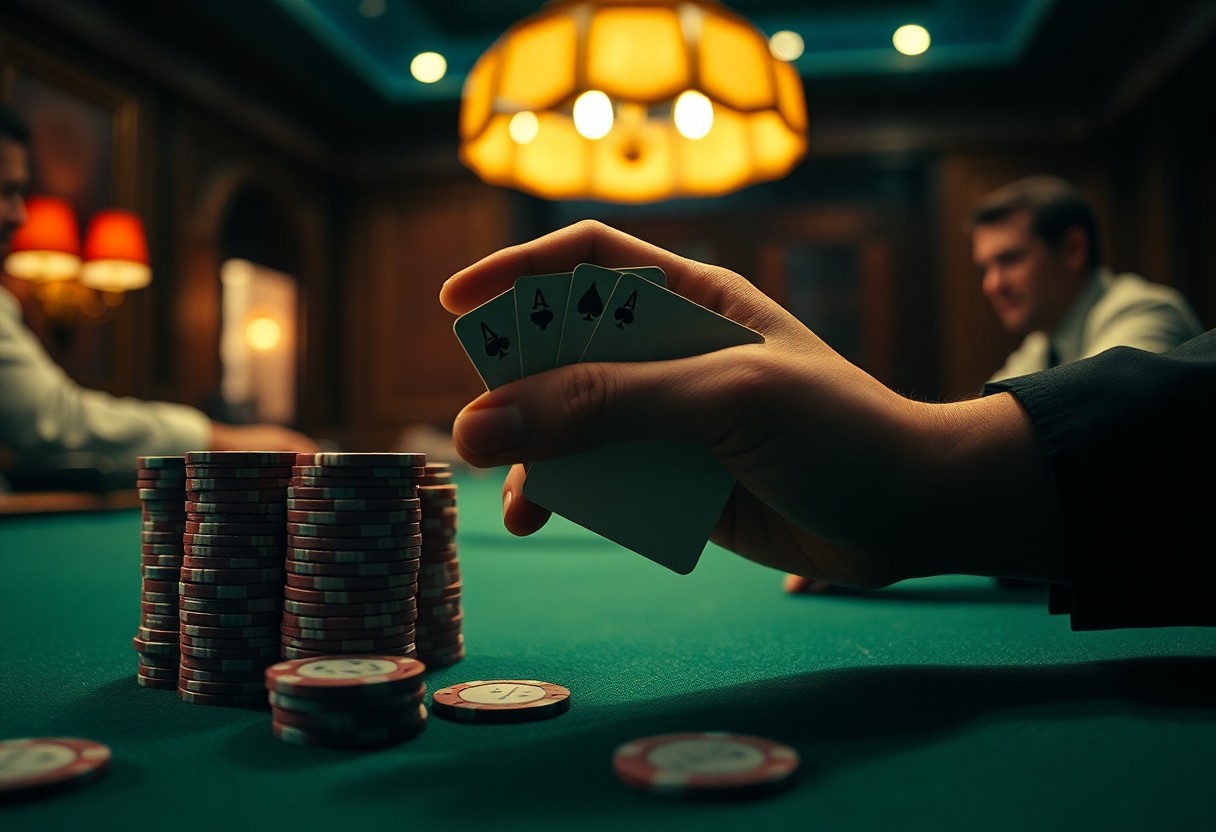
This guide teaches beginners how to bluff with confidence at the poker table, focusing on establishing table image, selective aggression and reading opponents; prioritize position and timing as the most important levers, be wary of overbluffing and poor bet sizing which cost chips, and cultivate controlled, deceptive confidence through practice, hand selection and watching reactions.
Understanding Bluffing
Bluffing functions as a deliberate narrative: you force opponents to fold better hands by creating a believable story with your bets, timing and sizing. Successful bluffing leans on position, opponent profiling and matching bet sizes to board texture; in practice, many winning players bluff roughly 10-20% of playable hands from late position. Use bluffs when fold equity outweighs showdown value and when your table image supports aggression.
Types of Bluffs
There are distinct categories-each with its own logic: a pure bluff represents a made hand, a semi-bluff combines equity (draws) with pressure, and a continuation bet preserves initiative after preflop aggression. For instance, a semi-bluff on a wet flop with a flush draw wins both by folding opponents and completing the draw about 35-40% of the time. After assessing stack sizes and opponent tendencies, pick the type that matches your story.
- Pure bluff
- Semi-bluff
- Continuation bet
- Delayed bluff
- Check-raise bluff
| Bluff Type | When to Use |
|---|---|
| Pure bluff | Heads-up vs tight caller on dry boards |
| Semi-bluff | With strong draws on coordinated boards |
| Continuation bet | As preflop aggressor on dry flops |
| Delayed bluff | Turn/river after showing weakness earlier |
Factors Influencing Successful Bluffing
Key variables are position, stack depth, bet sizing, table image and opponent tendencies; acting last and using sizes aligned with pot odds raises fold rates. Quantitatively, a 50-75% pot c-bet on the flop usually exerts substantial pressure, while short stacks often negate fold equity. Any bluff must be weighed against these measurable factors before committing chips.
- Position
- Stack depth
- Bet sizing
- Table image
- Opponent tendencies
Apply data-driven thresholds: if an opponent folds to river bluffs >60%, targeting them with river bluffs increases ROI; if they call down >80%, shift to value-heavy lines. In a $1/$2 cash game, a 3x open with a 60% pot c-bet on favourable boards will often force folds from unpaired hands, while the same line fails versus callers who show down frequently. Any adjustment based on observed frequencies will improve long-term results.
- Position
- Opponent fold %
- Stack sizes
- Bet sizing
- Table image
Building Confidence at the Table
Confidence develops from small, repeatable wins: practice 30-minute sessions, review 100 hands weekly, and track bluff success rates. Emphasize position, protect your table image, and use controlled bet sizing-50-70% of the pot often convinces folds. Study opponents’ fold frequencies and adjust; a steady, disciplined approach reduces tilt and increases bold, calculated plays that look natural and consistent.
Tips for Overcoming Anxiety
Anchor to a pre-hand routine: three deep breaths, visualizing a successful fold or call, then act. Use low-stakes games to expose yourself to pressure-play 200 hands before moving up. Focus on process metrics (decision time, bet sizing) rather than outcomes to lower stress. This routine builds resilience and improves reads under pressure.
- Confidence
- Breathing
- Practice
- Table image
- Position
- Low stakes
Step-by-Step Guide to Mastering Bluffing
Start by observing 6-8 hands to gauge opponents, then pick targets who fold often. Choose spots in late position with missed boards, size bets to 50-70% pot, and vary timing to avoid patterns. Track bluff frequency-aim for 20-30% in appropriate spots-and review video or hand histories after each session to refine choices.
| Step | Action & Example |
| 1 | Observe 6-8 hands; note who folds to C-bets 60%+ |
| 2 | Pick late-position missed-flop target (e.g., K♣7♠ on 9♠8♦2♣) |
| 3 | Bet 50-70% pot; opponent often folds to medium bets |
| 4 | Mix timing and size; bluff 20-30% frequency in these spots |
| 5 | Review 50 hands/week; adjust based on success rate |
Analyze errors by logging hands and noting why bluffs failed: wrong opponent, bad position, or inconsistent bet sizing. Use a simple metric sheet (successes/attempts, opponent type) and aim to improve success rate by 5-10% each month through deliberate practice and targeted adjustments.
| Metric | How to Measure |
| Success Rate | Bluffs made vs. folds obtained (track weekly) |
| Opponent Type | Loose-passive, tight-aggressive-note which fold more |
| Bet Size | Record pot% used and correlation with fold rate |
| Position | Late vs early; prioritize late-position bluffs |
Analyzing the Pros and Cons of Bluffing
| Pros | Cons |
|---|---|
| Steals pots without showdown, directly increasing short-term winnings. | Introduces high variance; losing streaks can deplete your stack. |
| Builds an aggressive image that makes later value bets more profitable. | Overuse makes your strategy transparent and invites frequent calls. |
| Forces opponents into difficult decisions, causing mistakes. | Can be punished by raises or check-raises, costing extra chips. |
| Especially effective heads-up or in short-handed play where fold equity rises. | Much less effective in multiway pots; fold equity drops sharply. |
| Exploits tight players who fold too often, providing easy profit. | Fails badly against sticky or loose-callers who widen calling ranges. |
| Makes your range balanced when mixed correctly, preventing exploitation. | Poor balance reveals your tendencies and reduces long-term EV. |
| Can create momentum and control table dynamics. | Mistimed bluffs damage table image and can lead to tilt. |
| Short-term ROI spikes are possible with well-timed moves. | Requires precise sizing and timing; mistakes cost disproportionately. |
Advantages of Bluffing
When executed selectively, bluffing converts otherwise lost pots into profit: if you risk $50 to win $100, breakeven fold frequency is 33.3%, so making opponents fold more than that yields positive EV. Mixing bluffs into your range also prevents opponents from isolating your value hands, and in heads-up pots fold equity can exceed 50% against tight players, delivering consistent incremental gains.
Disadvantages and Risks
Bluffing increases variance and can erode a stack quickly if success rates are low; many analyses show typical bluff success falls below 30% unless carefully targeted. Opponents who adjust by calling or check-raising turn bluffs into costly errors, and repeated failed bluffs damage future fold equity.
Additionally, multiway situations amplify risk: with two or more opponents your fold equity often drops by roughly half compared to heads-up, making the same bluff far less profitable. Psychological effects matter too-failed bluffs can shift table image and trigger tilt, which statistically lowers decision quality and increases long-term losses.
To wrap up
Now, beginners should treat bluffing as a disciplined tool: study opponents’ tendencies, control tempo and body language, size bluffs to the story your hand tells, practice low-risk moves, and prioritize bankroll and table selection. Confidence grows by combining small, well-timed bluffs with solid post-flop decisions and frequent review of hands. When you adopt this methodical approach, your bluffs become credible and your overall play stronger.
FAQ
Q: When is it appropriate for a beginner to attempt a bluff at the poker table?
A: A good time to bluff is when several factors increase your fold equity: you are in late position, opponents show weakness (checking, calling small bets, long pauses), the pot size and stack depths make a fold profitable, and your betting story is consistent with a strong hand. Start with single-opponent situations and avoid bluffing into heads-up callers who have deep stacks and a calling range that dominates yours. Use semi-bluffs (bluffing with a hand that can improve) more often than pure bluffs; these give you additional ways to win. Track opponents’ tendencies-players who rarely fold are poor targets, while tight players are better candidates. Finally, size your bets to threaten their calling range (betting too small reduces fold equity; betting too large can make your action obvious).
Q: What practical steps can a beginner take to build confidence when bluffing?
A: Build confidence incrementally: practice at lower stakes or play-money tables to test bluffs without heavy cost, and review hand histories to see what worked. Develop a consistent table image by acting the same way with strong hands and bluffs-this reduces the chance you’ll telegraph your intent. Learn basic opponent classification (tight, loose, passive, aggressive) and tailor bluffs to those categories. Use video and hand-analysis tools to simulate scenarios and refine timing and bet sizing. Start by incorporating small, controlled bluffs (semi-bluffs, continuation bets) and increase frequency only as your success rate and read accuracy improve. Maintain emotional control-accept failed bluffs as learning data rather than letting them tilt your decisions.
Q: What common bluffing mistakes should beginners avoid and how can they correct them?
A: Avoid over-bluffing and bluffing in bad spots, such as multiway pots, against many callers, or against players who call light. Do not bluff when your story is inconsistent-if your bet sizes or timing contradict the hand you claim to have, opponents will call. Refrain from using identical physical or timing tells when bluffing; vary your behavior so your patterns are not exploitable. Don’t show bluffs too often; revealing failed bluffs teaches opponents how to play you. When a bluff fails, fold decisively instead of chasing losses. Correct these mistakes by studying hands where bluffs failed, adjusting ranges and bet sizing, practicing disciplined folding, and limiting bluffs to spots with positive expected value based on position, reads, and stack dynamics.