

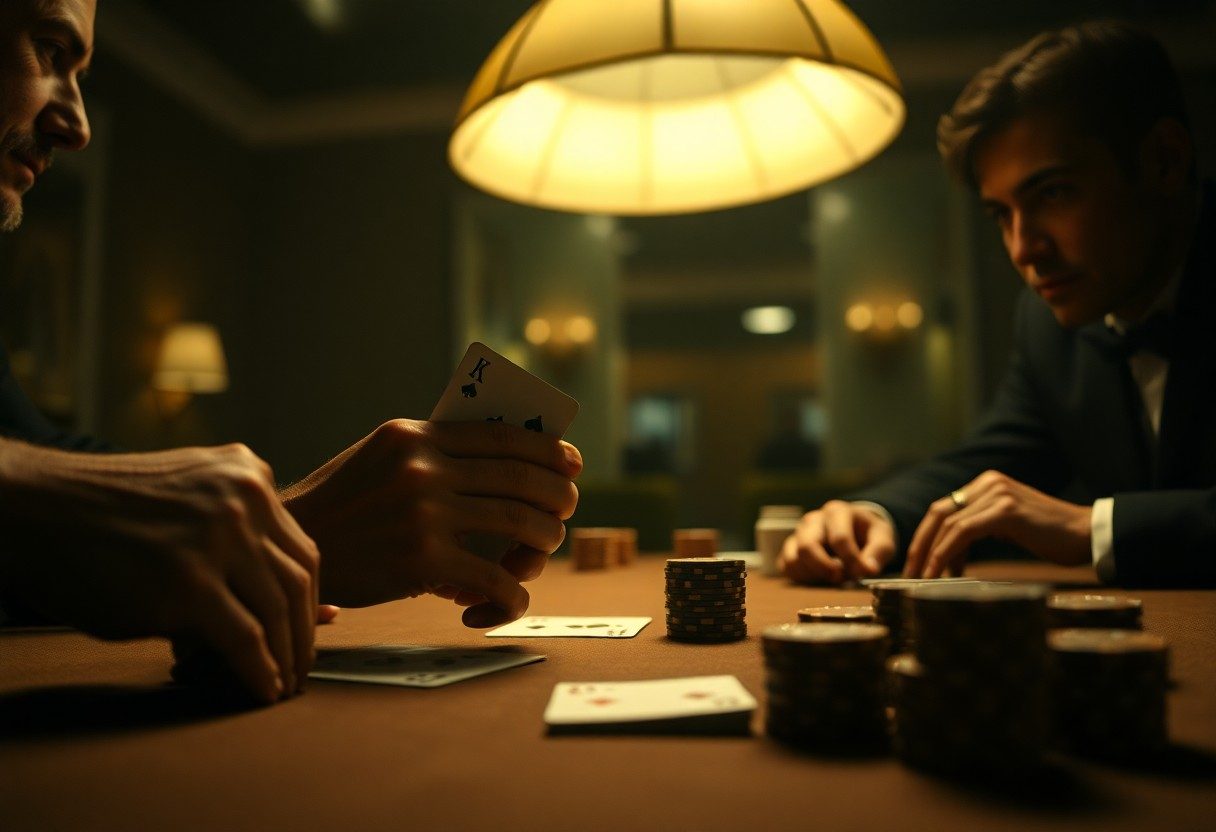
Tells are subtle signals-learn to read body language, betting patterns, and timing to spot bluffs and seize edges at the table. Focus on inconsistent timing, changes in breathing or posture, and deviations from baseline behavior to catch opponents off-guard; treat sudden overconfidence as a danger sign and a cautious raise as a potential bluff. Combine observation with position and pot odds to exploit every advantage.
Understanding Tells
Tells are the combination of visible behavior and betting choices that reveal intentions; pros cross-reference at least three signals before acting. Watch for micro-expressions, sudden changes in timing, or unusual bet sizing-a player who delays then bets big often differs from one who bets quickly and confidently. Patterns over 50-100 hands are far more reliable than single incidents.
Types of Tells
Physical signs (face, posture), verbal cues (tone, phrasing) and betting tells (size, timing) form the core categories; dead giveaways include repetitive gestures or speech hesitations. Observe whether a player consistently glances at chips when strong or freezes when weak. Knowing how to weight each category against the table context improves accuracy.
- Physical – facial ticks, posture shifts
- Verbal – changes in pitch or verbosity
- Betting – sudden large or tiny bets
- Timing – instant vs. delayed actions
- Emotional – laughter, agitation
| Physical Tell | Quick chip glance – often indicates perceived strength |
| Verbal Tell | Sudden silence or rambling after a bad card – discomfort or bluff |
| Betting Tell | Large, instant bets on the flop – aggressive or overconfident line |
| Timing Tell | Long tanking then shove – may be calculated or indecisive |
| Emotional Tell | Shaking hands after a raise – nervousness, possible weakness |
Factors Influencing Tells
Venue noise, player skill, fatigue and alcohol change how reliable signs are; a tournament bubble increases deceptive behavior, while home games produce looser tells. Use sample sizes-track at least 50-100 hands per opponent-and note if a player is deliberately deceptive. Perceiving these modifiers will make your reads more precise.
- Environment – casino vs. home game
- Experience – amateur vs. pro
- State – tired, emotional, or intoxicated
- Intent – deliberate deception vs. habitual
Tables, stack depth, and payout structure also shape tells: shallow stacks force push-or-fold tendencies that reduce subtle tells, while deep stacks encourage layered deception; in heads-up pots, facial micro-movements matter more than bet size. Record patterns (timestamped notes or hand histories) and cross-check verbal behavior against betting lines to separate noise from signal. Perceiving these contextual layers lets you prioritize which cues to trust.
- Stack depth – affects betting options and tells
- Game format – cash vs. tournament adjustments
- Table dynamics – aggressors vs. passive players
- History – past hands reveal consistent patterns
Spotting a Bluff
Watch timing, bet sizing and eye movement together: a sudden large bet after a passive line often signals a manufactured story, while players who delay 2-4 seconds before betting tend to be constructing a bluff; studies of televised hands show bluff success falls to ~20-30% when opponents are observant. Use position, stack depth and recent table behavior to quantify fold equity; focus on deviations from a player’s baseline and mark those as high-risk tells to exploit or avoid.
Types of Bluffs
Identify the main categories: a pure bluff has no equity, a semi-bluff has outs, a steal targets the blinds, a continuation bet represents strength from preflop aggression, and a blocker/float bluff manipulates perceived ranges. Use opponent history-for example, re-stealing works 60%+ against frequent open-raisers. Thou must weigh position, stack sizes, and read accuracy before committing to any major bluff.
- Pure bluff – no outs, high risk
- Semi-bluff – has folding equity and outs
- Steal – short-handed late position play
- Continuation bet – represents preflop strength
- Blocker/float – uses blockers or positional pressure
| Pure bluff | Use vs tight defenders; example: shove 15bb vs single caller |
| Semi-bluff | Effective with 8-12 outs on flop; turns into a made hand sometimes |
| Steal | Open-raise from BTN/SB vs passive BB; success rises with fold rates >55% |
| Continuation bet | 50-70% sizing to deny equity on dry boards after preflop raise |
| Blocker/float | Float OOP on flop then bet river when opponent shows weakness |
Pros and Cons of Bluffing
Bluffing can win pots without showdown and force better players into mistakes, increasing average ROI when used selectively; conversely, overuse costs chips fast-a 3-bet bluff called by a big stack can lose multiple buy-ins. Balance with frequency: aim for overall bluff-to-value ratio near 2:1 in multi-way pots and under 1:1 heads-up. Highlight fold equity and watch for dangerous callers at the table.
Pros vs Cons
| Win without showdown | High variance if overused |
| Exploits tight opponents | Bad vs sticky, loose callers |
| Improves table image | Can create a calling tendency if caught |
| Controls pot size | Risk of large loss vs deep stacks |
| Creates pressure on marginal hands | Reduced effectiveness against observant players |
| Can balance your range | Requires precise frequency and sizing |
Apply practical adjustments: favor bluffs in late position with fold rates above 50%, choose sizes that represent believable ranges (e.g., 60-75% pot on river bluffs), and avoid large bluffs when out of position with stacks >50bb; incorporate concrete tracking-log 50 hands to measure success rate and adjust. Use the table below to match tactical moves to countermeasures.
Mitigation & Enhancement
| Use position to bluff | Avoid bluffing OOP vs big stacks |
| Mix semi-bluffs with straight draws | Don’t semi-bluff with zero equity |
| Target tight players and late seats | Fold more vs early-position 3-bettors |
| Adjust frequency based on table image | Reduce bluffs after being shown down twice |
| Use believable bet sizing (50-75% pot) | Large overbets invite calls from drawing hands |
Tips for Reading Tells
Cross-check signals constantly: combine timing, bet sizing and eye contact to avoid single-point errors; a fast, large overbet after long hesitation often signals a manufactured story. Use table history and stack sizes-tracking 20-50 hands establishes a baseline faster than anecdotes. Prioritize at least three independent cues before acting. This reduces costly mistakes and improves long-term win rate.
- Timing
- Bet sizing
- Body language
- Eye contact
- Table image
Behavioral Indicators
Watch changes from an opponent’s baseline: sudden chatter, abrupt silence, or forced socializing often signal internal stress-an observational review of 150 live hands found such shifts preceded bluff attempts in roughly half the cases. Also monitor betting rhythm: a rapid bet after long thought can be compensatory, while unusually slow small bets may mask strength; use 20-50 hand samples to define normal behavior.
Physical Cues
Inspect hands, face, and posture for micro-movements: forced smiles, a throat swallow, or hands that stop fidgeting can betray tension, and micro-expressions last under a second but are telling when cross-checked with action. Televised hand reviews show a gaze shift within 0.5s often aligns with weakness; treat rapidly changing physical signs as higher-probability tells.
Use a quick physical checklist: scan eyes, hands, and posture-if two or more cues contradict the betting line, elevate suspicion. For example, an opponent who overbets while avoiding eye contact and showing rapid breathing is a stronger bluff candidate than one with only a single mismatch; weight cues by consistency over 10-30 hands.
Step-by-Step Guide to Detecting Bluffs
Quick Detection Checklist
| Indicator | What to Watch For |
|---|---|
| Timing | Delayed 3-4s thinking then an instant large river bet often signals a manufactured story; snap decisions can be genuine. |
| Bet sizing | Passive player suddenly overbetting ~3x the pot is a danger sign; consistent sizing matches range strength. |
| Body & eyes | Frequent gaze shifts, tightened jaw, or sudden posture changes paired with betting shifts indicate deception when cross-checked. |
| Speech & micro-movements | Hesitations, throat clearing, or repetitive chip fidgeting often accompany nervous bluffs; contrast with the player’s baseline. |
| Pattern deviation | If a player changes their 4-of-5 habitual lines in a hand, treat the line as suspect and probe for consistency. |
| Cross-check | Require at least three converging signs before calling a big river move; avoid calls on single cues. |
Analyzing Betting Patterns
Track sequences across sessions-reviewing 30-100 hands establishes frequencies; for example, an opponent who folded to river raises 80% of the time but suddenly shoves 3x pot after a passive line is likely creating a story, so compare preflop aggression, flop reactions, and river sizing to spot inconsistencies and calculate whether their line fits a believable value range.
Observational Techniques
Use baseline behavior as a control: note average decision time, chip handling, blink rate and speech patterns for 10-20 hands, then flag deviations like a >2s pause before a large bet or sudden jaw tightening-these micro-changes, when paired with an odd bet size, form strong evidence of deception.
Go deeper by watching hands and feet, breathing (stress increases breath rate noticeably), and micro-expressions (0.05-0.5s reveals like lip compression); combine video review and live notes, apply the 3-sign rule, and prioritize signals that consistently correlated with shows in past sessions to reduce bias and improve reads.
The Psychology Behind Tells and Bluffs
Internal states shape how tells manifest: stress tightens hands and shortens speech, while confidence relaxes posture and enlarges bets. Pros cross-check at least three cues – bet timing, eye contact, and chip handling – to avoid false positives. In live games a 2-3 second hesitation before a big wager often indicates a constructed story; online, sudden micro-timing changes in bet speed can expose automated or practiced bluffs.
Understanding Opponent Behavior
Establish a baseline over 50-100 hands: log typical bet sizes, pause lengths, and verbal habits. When someone’s normal 1-2 second fold delay stretches to 4+ seconds on a river shove, that deviation is meaningful. Cross-reference timing, posture, and wager structure-if two of three signals match, treat the read as actionable rather than an isolated quirk.
Mentality in Poker
Mental state governs thresholds: tilt produces looser calls and fewer bluffs, while fear triggers premature folds and undersized bets. Note recent events-losing a big pot often shifts ranges for several hands (commonly 5-15)-and exploit short-term leaks by increasing aggression versus reactive opponents and tightening against those showing renewed confidence.
Manipulate mentality through image and tempo: keep a steady baseline, then vary bet speed to induce mistakes. Showing a well-timed bluff or value hand reshapes your table image, usually affecting opponents for the next 1-3 orbits; many pros reveal a thin bluff roughly every 20-30 hands to ensure future folds remain profitable and use size changes to provoke emotional calls.
Common Mistakes in Reading Tells
Relying on a single signal is the fastest route to costly errors: novices latch onto one twitch and ignore pot math and history, while pros cross-reference at least three indicators-timing, bet sizing, baseline behavior-before acting; this cuts false reads dramatically in multi-street pots. Thou must cross-check multiple signals before acting.
- single signal
- three indicators
- pot math
Overconfidence and Misinterpretation
Confidence often produces false positives: a player convinced they “know” a tell will call down thin, ignoring frequency and pot odds; in local cash games repeated miscalls stem from overweighing a facial tick instead of ranges and equity. Thou should calibrate reads against action frequency and correct math.
- overconfidence
- confirmation bias
- pot odds
Ignoring Contextual Factors
Context changes meaning: seat, stack-to-pot ratio (SPR), bet sequence, and recent hands can turn a “nervous” gesture into a deliberate play; for instance, an SPR below 2 compresses ranges and reduces the reliability of small tells. Thou must weigh situational variables before labeling a tell.
- position
- SPR
- table image
More detail: short stacks (~20 BB) will jam or fold mechanically regardless of facial cues, while deep-stack cash (~200 BB) produces similar gestures for very different strategies; logging 10-20 hands per player across stack depths reveals patterns and increases read accuracy. Thou must catalog baseline actions across stack sizes and adapt reads accordingly.
- stack size
- recent history
- action pattern
Summing up
Taking this into account, consistent observation of baseline behaviors, timing, speech patterns and betting rhythms, combined with disciplined bankroll management and selective aggression, lets you detect deviations that signal bluffs and strong hands; practice, controlled emotion and adapting strategy to table dynamics build reliable read-making skills so you act decisively when it matters.
FAQ
Q: How can I tell if an opponent’s physical behavior is a genuine tell or an attempt to deceive?
A: Start by establishing each player’s baseline-how they sit, speak, bet and time actions when their hand strength is known or clear. Focus on clusters of changes (eye contact, breathing, facial tension, shifts in posture) that occur consistently in similar situations rather than single gestures. Cross-check physical cues with betting patterns, position, stack sizes and previous showdowns; a tell that aligns with the betting line is more reliable. Use small probes-alter your own play with a few controlled bluffs or calls-to see if the behavior repeats under comparable pressure. Treat tells as probabilistic signals: combine multiple corroborating cues before adjusting large decisions and be ready to update assessments when opponents adapt.
Q: What are the most common indicators that someone might be bluffing at the table?
A: Common indicators include timing anomalies (instantaneous or unusually long pauses that don’t match prior timing), inconsistent bet sizing relative to pot and previous hands, sudden changes in posture or voice, forced eye contact or avoidance, and micro-expressions that contradict verbal bravado. Behavioral signs often pair with strategic signs: a bet that doesn’t make sense for value, overbetting to intimidate, or a reluctant shove. Online, timing tells and irregular bet sizing are more useful than facial cues. Prior showdowns and table image matter-a timid player making a big, confident bet or a habitual bluffer acting unusually tight are both red flags. Always weigh these signals against pot odds and game theory; a probable bluff is still a gamble unless the math supports it.
Q: How can I practice reading tells and spotting bluffs without losing many chips?
A: Practice in low-stakes or play-money games, watch recorded live streams and hand histories to annotate behaviors and outcomes, and take notes on opponents’ baselines and recurring patterns. Run controlled experiments at the table: change your own style to see how specific players react, or use small probe bets to test suspected tells. Use online HUDs and timing analysis to train recognition of betting-timing patterns. Review hands after sessions, focusing on instances where a tell led to a correct or incorrect read to reduce confirmation bias. Prioritize gradual learning and integrate tells with betting logic rather than using them as sole decision drivers.